How to Audit Your Freight Forwarder: 5 Questions That Protect Your Margins
Most importers never audit their forwarder, and that's how margins bleed. Five questions to ask before renewing your contract — or finding a new partner.
ByJason Kim · Branch Manager · 15 years in freight forwarding · Los Angeles · Frankfurt · Chicago
Most importers and forwarders spend weeks fiercely negotiating rates when onboarding a new drayage carrier, warehouse, or overseas agent. But once that routing guide is set, it's often forgotten.
Over time, service levels can slip, accessorial charges creep into final invoices, and hidden costs silently erode your profit margins. Taking a "set it and forget it" approach to your logistics partners is a guaranteed way to bleed cash. A systematic vendor audit isn't about micromanaging—it's about protecting your bottom line and ensuring you are actually getting the service you pay for.
Here is how to implement a painless, high-impact vendor audit to keep your supply chain lean.
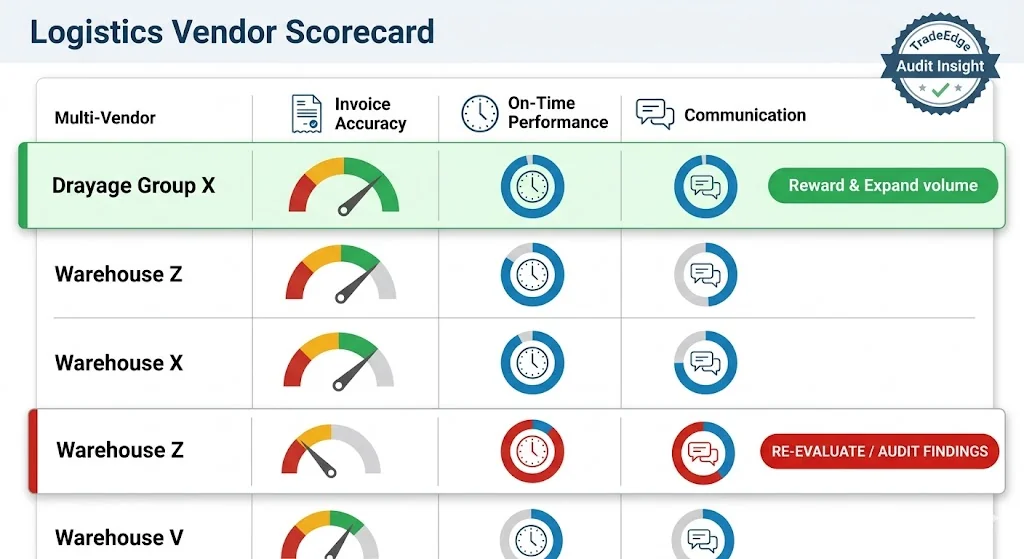
The 4 Pillars of a Bulletproof Vendor Scorecard
Stop looking solely at the base rate. To truly evaluate a vendor, you need to grade them across these four core metrics:
- Invoice Accuracy: How often do their final invoices match the original quote? Chasing down accessorial charge disputes (like unauthorized wait times or chassis splits) is a massive drain on your accounting team's resources.
- On-Time Performance (OTP): Are your truckers consistently hitting their appointment times at the rail ramp or port? Is your cross-dock facility turning cargo within the agreed Service Level Agreement (SLA)?
- Communication & Responsiveness: In global logistics, bad news is always better than no news. Grade your vendors on how quickly and proactively they report delays, rolled bookings, or equipment shortages.
- Exceptions & Claims: Track the frequency of damaged cargo, missing pieces, or overall mishandled freight.
The Audit Playbook: Step-by-Step
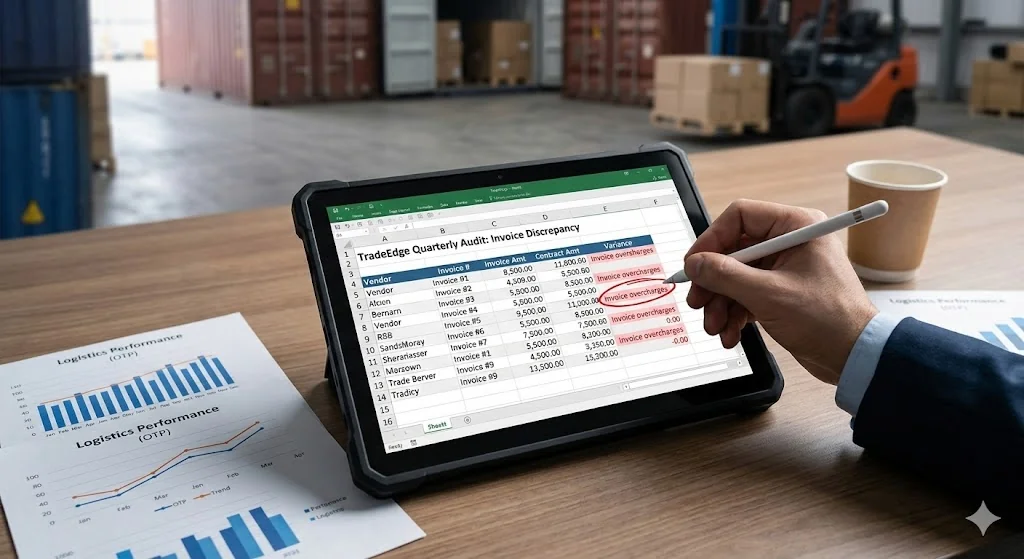
You do not need an expensive enterprise software suite to do this. You can execute a highly effective audit using just your standard operating system and a spreadsheet.
- The Data Pull: Pull 90 days of shipment data for your top three vendors in a specific category (for example, your primary local Chicago drayage carriers or your main European consolidation partners).
- The Discrepancy Spot-Check: Pull 10 random invoices per vendor and compare them directly against your contracted tariff. Look specifically for fuel surcharge (FSC) miscalculations or unapproved accessorials.
- The QBR (Quarterly Business Review): Structure a 15-minute alignment call with the vendor to review the scorecard. Present the data objectively. Let the numbers guide the conversation.
Renegotiate, Reward, or Walk Away
Data is only valuable if you act on it. Use the results of your audit to push back on unwarranted rate increases or to leverage your actual volume data to secure better pricing tiers.
Just as importantly, use this data to identify and reward your high-performing vendors. Shift more consistent, lucrative lane volume to the partners who are actually making your life easier. Conversely, if a vendor consistently fails the scorecard and shows no effort to correct course, you now have the definitive paper trail you need to confidently walk away and replace them.
Auditing your vendors is a direct investment in your own brand's reliability. Stop paying premium rates for mediocre performance.