The ISF Checklist: Don't Let a $5,000 Fine Ruin Your Import Margin
Avoid a $5,000 CBP fine with our ISF (10+2) checklist. Learn why the US requires Importer Security Filing and how to manage the 24-hour ocean deadline
ByJason Kim · Branch Manager · 15 years in freight forwarding · Los Angeles · Frankfurt · Chicago
In the world of ocean freight, timing isn't just about delivery—it’s about compliance. If you are importing goods into the United States via ocean vessel, the Importer Security Filing (ISF) , also known as "10+2," is your first and most important hurdle.
Missing the deadline or filing inaccurate data doesn't just result in a slap on the wrist; U.S. Customs and Border Protection (CBP) can issue liquidated damages starting at $5,000 per violation. For many importers, that single fine can wipe out the entire profit margin of a shipment.
What is ISF and Why Does It Exist?
The ISF is a mandatory electronic document that must be submitted to Customs before cargo is loaded onto a vessel heading to the U.S. While it might feel like another layer of "red tape," it was born out of a critical security shift following the SAFE Port Act of 2006.
The Security Mandate:
- Pre-Loading Screening: ISF forces data submission 24 hours before loading at the origin port (like Frankfurt or Shanghai). This allows CBP to flag potential threats while the cargo is still on the pier overseas.
- Targeting "Bad Actors": By linking the manufacturer, buyer, and stuffing location, the government can use automated systems to flag anomalies or illogical routing paths.
- Efficiency: By clearing "low-risk" shipments early, CBP can focus its physical inspection resources on the shipments that actually pose a threat. To learn more, see our guide on Customs Exams and Mitigating Delays.
The "10+2" Breakdown: What You Need to Provide
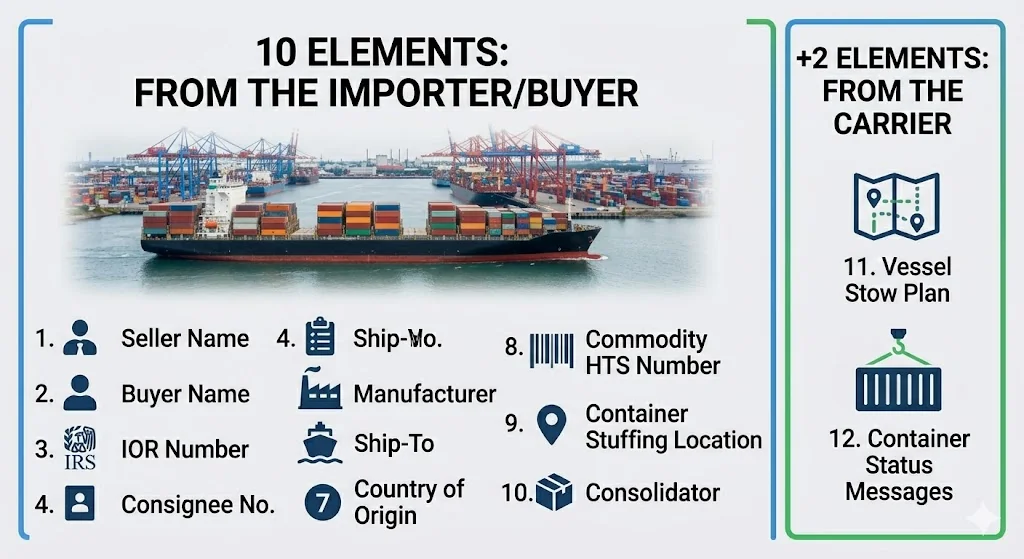
To avoid a "No Load" message or a heavy fine, ensure your freight forwarder or broker has these 10 data elements from you:
From the Importer/Buyer:
- Seller Name and Address
- Buyer Name and Address
- Importer of Record Number: Your IRS/EIN or Social Security number.
- Consignee Number(s)
- Manufacturer (or Supplier) Name and Address
- Ship-to Name and Address: The first party scheduled to receive the goods after customs release.
- Country of Origin
- Commodity HTS Number: Provided to at least the 6-digit level. (See our guide on Incorrect HS Codes).
From the Logistics Chain:
- Container Stuffing Location
- Consolidator (Stuffer) Name and Address
(Note: The "+2" elements—the Vessel Stow Plan and Container Status Messages—are typically handled by the steamship line.)
TradeEdge Pro-Tips to Mitigate Risk
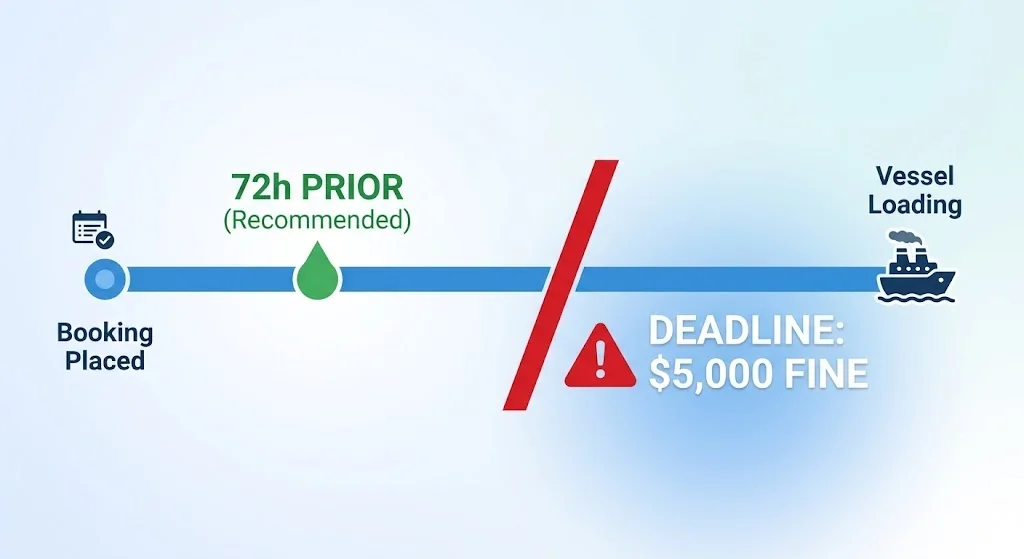
- The Golden Rule: The ISF must be filed no later than 24 hours before the cargo is laden onto the vessel. If the ship is at sea, you are already in the "fine zone."
- Standardize Your SOP: Make ISF data submission part of your "Booking Request." Do not wait for the Bill of Lading.
- The Bond Factor: You must have a Customs Bond (Single Entry or Continuous) to file. An expired bond leads to an automatic ISF rejection.
- The 72-Hour Internal Goal: While the legal limit is 24 hours, aim for 72 hours. This provides a buffer for time zone differences between your U.S. office and overseas origins.
The Bottom Line
CBP treats the ISF as a security document. When you fail to file, you aren't just missing a deadline; you are creating a "blind spot" in national security. By treating this checklist as a non-negotiable step in your procurement cycle, you protect your shipments from "Do Not Load" orders and keep your margins intact.
Is your team struggling with ISF timing? Let’s discuss how to automate your data flow to ensure you never miss a 24-hour window again.