What Is a Freight Forwarder and Do You Actually Need One?
What does a freight forwarder actually do — and do you need one? A 15-year industry veteran explains when to use one and when to go direct.
ByJason Kim · Branch Manager · 15 years in freight forwarding · Los Angeles · Frankfurt · Chicago
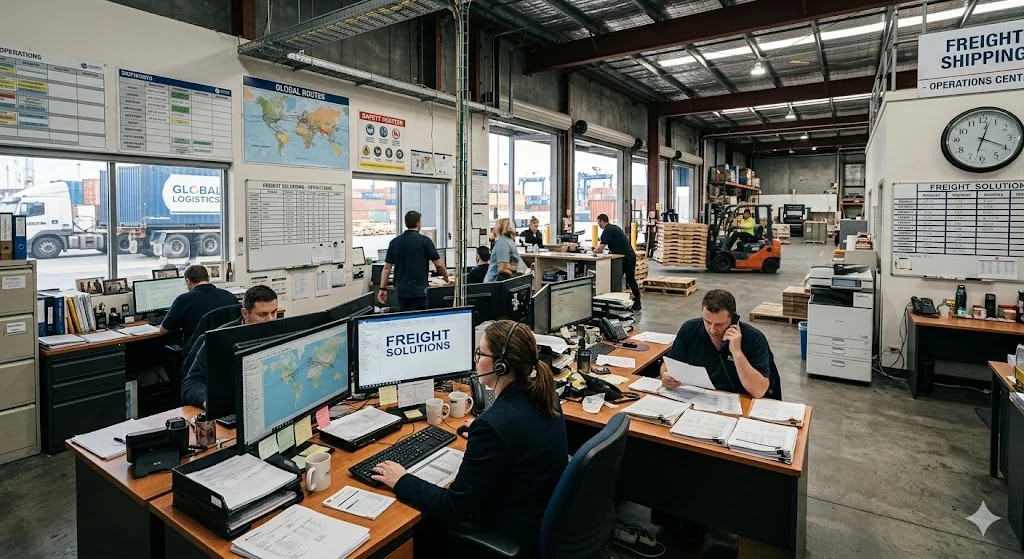
Every week I talk to importers who are paying a freight forwarder without fully understanding what they are paying for. And every week I talk to importers who are trying to manage international shipments on their own when they absolutely should not be.
Both situations cost money. Unnecessary freight forwarder fees on one side. Avoidable customs delays, duty overpayments, and compliance errors on the other.
After 15 years in this industry — managing freight out of Los Angeles, Frankfurt, and now Chicago — I want to give you the honest answer that most people in this business will not: what a freight forwarder actually does, when you genuinely need one, and when you might not.
What Is a Freight Forwarder?
A freight forwarder is a licensed intermediary that organizes the shipment of goods on behalf of importers and exporters. The freight forwarder does not typically own the ships, planes, or trucks that move your cargo — they are the architects of the transaction, coordinating all the parties involved and managing the documentation, compliance, and logistics on your behalf.
Think of a freight forwarder as a general contractor for your supply chain. Just as a general contractor does not lay the bricks or wire the electricity themselves but manages every subcontractor who does, a freight forwarder manages every link in your logistics chain — the ocean carrier, the customs broker, the drayage company, the warehouse, and the final mile delivery provider.
What a Freight Forwarder Actually Does — The Full List
Most importers know that freight forwarders "handle shipping." Here is what that actually means in practice:
Carrier booking and rate negotiation. Your freight forwarder books space on ocean vessels, air carriers, or trucking services on your behalf. Because established forwarders move high volumes of freight, they negotiate rates with carriers that individual importers rarely have access to. A mid-sized freight forwarder in Chicago may be moving thousands of containers per year — giving them significant buying power on your lanes.
Export documentation at origin. The freight forwarder coordinates with your supplier to ensure that all export documentation is correctly prepared — the commercial invoice, packing list, certificate of origin, and any other documents required by the importing country.
Bill of lading issuance. If your forwarder is acting as an NVOCC — a Non-Vessel Operating Common Carrier — they will issue their own house bill of lading to you while holding a master bill of lading with the actual ocean carrier. Understanding this distinction matters when something goes wrong.
Customs clearance at destination. Most freight forwarders either have a licensed customs brokerage division or work with a partner customs broker to file your customs entry, pay duties on your behalf, and manage the release of your cargo from CBP. This is one of the most valuable services they provide — customs compliance is complex, and errors are expensive.
Cargo tracking and exception management. A good freight forwarder monitors your shipment at every milestone — vessel departure, transshipment, vessel arrival, customs clearance, and final delivery — and communicates proactively when something goes off track. A bad freight forwarder waits for you to call them.
Freight insurance coordination. Your forwarder can arrange cargo insurance on your behalf. This is not the same as the carrier's limited liability — which typically covers only a fraction of your cargo value. Proper cargo insurance covers your actual commercial value.
When You Absolutely Need a Freight Forwarder
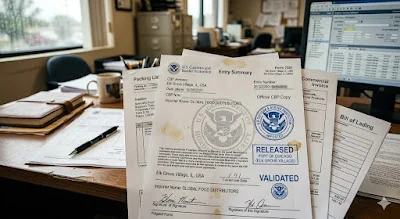
There are situations where attempting to manage international freight without a freight forwarder is not just difficult — it is genuinely risky.
If you are importing for the first time, a freight forwarder is non-negotiable. The documentation requirements, customs regulations, duty calculations, and carrier relationships involved in an international shipment are not something to learn by trial and error when real money and real cargo are at stake.
If your cargo is subject to regulatory requirements — FDA oversight for food and cosmetics, CPSC requirements for consumer products, EPA requirements for certain chemicals — a freight forwarder with experience in your product category is essential. Regulatory holds are expensive and damaging to your supply chain timing.
If you are importing full container loads on a regular basis, a freight forwarder gives you the buying power, the systems, and the relationships to manage that volume efficiently. Trying to book ocean freight directly with carriers as a small-to-mid-size importer is possible but rarely cost-effective.
If you are moving project cargo — oversized, heavy, or technically complex shipments — a specialized freight forwarder is critical. The planning, permitting, and coordination required for project cargo is a discipline in itself. I have managed shipments of industrial equipment across three continents, and the complexity involved goes far beyond what a standard logistics team can handle without specialist support.
When You Might Not Need a Freight Forwarder
This is the part most freight forwarders will not tell you.
If you are importing small parcel shipments under the de minimis threshold — currently $800 per shipment entering the United States — you may not need a freight forwarder at all. Express courier services like FedEx, UPS, and DHL handle customs clearance for de minimis shipments automatically as part of their service.
If you are a large enterprise importer with a sophisticated in-house trade compliance team, licensed customs brokers on staff, and direct carrier contracts, you may find that using a freight forwarder adds cost without adding proportional value. Some companies of this scale manage their logistics function almost entirely in-house.
If you are shipping on Delivered Duty Paid (DDP) terms — meaning your supplier is responsible for all freight, customs, and duty costs to your door — you are effectively outsourcing the logistics function to your supplier. In this case, you are not directly using a freight forwarder, though your supplier almost certainly is.
The Difference Between a Freight Forwarder and a Customs Broker
This is one of the most common points of confusion I encounter with importers. The two are related but distinct.
A licensed customs broker is specifically authorized by CBP to prepare and file customs entries, pay duties, and represent importers before U.S. Customs and Border Protection. Customs brokerage is a licensed profession — brokers must pass a rigorous CBP examination to obtain their license.
A freight forwarder coordinates the physical movement of goods and the broader logistics transaction. Many freight forwarders have customs brokerage licenses in-house and offer both services under one roof. Others work with independent customs brokers as partners.
When your freight forwarder handles your customs clearance, verify whether they are doing it through their own licensed brokerage or outsourcing it to a third party. This matters for accountability when something goes wrong.
What a Freight Forwarder Should Never Do
A good freight forwarder is a trusted advisor who protects your interests. Here are the red flags that tell you your forwarder is not meeting that standard.
They never proactively communicate problems. If you are always the one calling to ask where your shipment is, that is not a partner — that is a vendor processing transactions.
They cannot explain their invoice line by line. Freight invoices can be complex, but every charge should be explainable and justifiable. If your forwarder cannot tell you exactly what you are paying for, that is a problem.
They recommend solutions that benefit them financially without disclosing the conflict. Some forwarders earn higher margins on certain carriers or routing options. A forwarder who consistently recommends the most expensive option without a clear operational justification deserves scrutiny.
They make customs compliance decisions without consulting you. Customs liability belongs to the importer of record — you. Any classification, valuation, or compliance decision your forwarder makes without your knowledge or approval is a risk you are carrying without knowing it.
How to Choose the Right Freight Forwarder
The right freight forwarder for your business depends on three factors: your volume, your product category, and your lanes.
A forwarder who is excellent on trans-Pacific ocean freight may not have the network for air freight from Europe. A forwarder who is excellent for general merchandise may not have the regulatory expertise for FDA-regulated products. Match the forwarder to your specific needs — not just their general reputation.
Ask for references from clients with similar import profiles to yours. Ask specifically about their performance during disruptions — port congestion, carrier blanked sailings, customs exams — because that is when the quality of a freight forwarder becomes most visible.
And always, always get your rates and service commitments in writing before you move your first shipment.
The Bottom Line
For most importers, a good freight forwarder is one of the highest-return investments in your supply chain. The right partner saves you more in avoided mistakes, optimized routing, and duty savings than they cost in fees. But the keyword is right. A mediocre freight forwarder at a low rate is almost always more expensive in the long run than an excellent freight forwarder at a fair rate.
I have been on both sides of this relationship — as the forwarder and as the advisor working with importers to evaluate their forwarders. The difference between a great freight forwarding partnership and a poor one is almost always communication, transparency, and genuine expertise.
Choose accordingly.