Port Congestion Survival Guide: What Every Importer Must Do Before the Port Backs Up
LA/LB is calm right now. That's exactly when seasoned importers pre-position cargo. Five moves to make before port congestion returns.
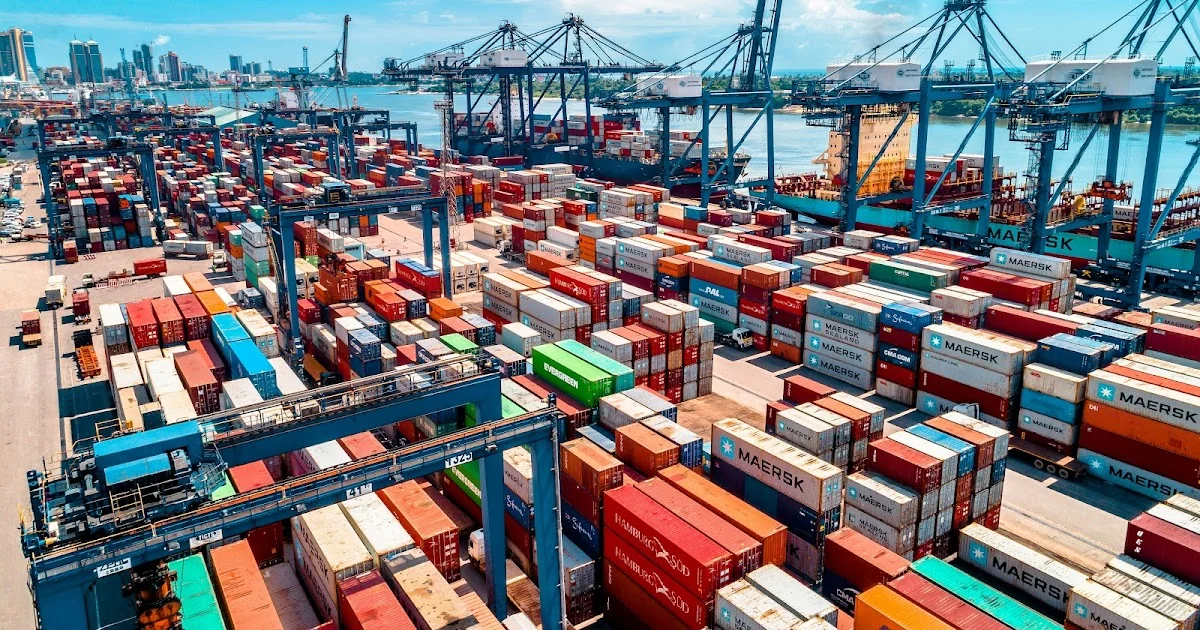
In April 2026, the average truck turn time at the Port of Long Beach was 55 minutes. Vessel anchorage wait was 0.08 days — essentially zero. Every gate was open. Cargo was moving.
If you are an importer who lived through 2021 and 2022, that sentence reads like fiction.
It is not fiction. It is the current operational reality at America's busiest container port. And it is precisely the kind of calm that experienced freight professionals treat with the most caution — because the ports that are smoothest in May are almost always the ones that are most congested by October.
I have been managing freight operations across Los Angeles, Frankfurt, and Chicago for fifteen years. I have coordinated shipments through the worst port congestion in modern US trade history. And the most valuable lesson I took from every one of those experiences is this: the importers who survive port congestion are not the ones who respond best when it hits. They are the ones who prepared before it arrived.
This guide explains the current port situation as of May 2026, what is coming in the second half of the year, and the specific steps every importer should take before the next surge makes them impossible.
The Current Port Picture — What the Data Actually Shows
The US port landscape in mid-2026 is unusually bifurcated. West Coast ports are performing well. East Coast ports are under more pressure. And neither condition will last unchanged through peak season.
At the Port of Long Beach and Port of Los Angeles — the LA/LB complex that handles approximately 40 percent of all US containerized imports — operations are running smoothly in early 2026. Vessel anchorage wait stands at a mere 0.08 days, truck queue times average 13 minutes at the terminal gate, and total truck turn times are 55 minutes — well under peak-season norms. The Port of Los Angeles processed 890,861 TEUs in April 2026 — 5.7 percent above last year and the second-best April on record — with strong import demand continuing despite ongoing uncertainty around tariffs and trade policy. Pangea NetworkShippeo
The East Coast picture is more mixed. New York and New Jersey are running 2 to 5 day anchorage waits on inbound vessels, with inland chassis shortages adding to drayage delays. Savannah is running more smoothly, with strong intermodal connections for US Southeast and Midwest distribution. Houston's Bayport Container Terminal has wait times up to 96 hours at peak periods. Forwarder
Savannah currently shows a medium port congestion index with 1.02 days as the median vessel waiting time. Savino Del Bene
Globally, Rotterdam and Hamburg are reporting 3 to 7 day vessel wait times as of Q1 2026, driven by a combination of recovered consumer demand, restocking cycles, and front-loaded shipments as importers sought to avoid anticipated tariff changes. Global container port throughput reached record levels in late 2025 and early 2026. Forwarder
One major risk factor that has been removed from the East Coast picture: the International Longshoremen's Association — the ILA — and the United States Maritime Alliance signed a six-year labor contract in March 2025, ratified by nearly 99 percent of union members. The contract includes a record 62 percent wage increase over six years and full protection against fully automated terminals during the contract term, which runs through September 2030. The threat of an East Coast port strike — which caused enormous pre-strike front-loading in late 2024 — is off the table for the next four years. That is genuinely good news for importers on the East and Gulf Coast lanes. Blogger
The risk that remains is not labor. It is volume.
The H2 2026 Warning: Why Calm Ports in May Become Congested Ports in September
Projections point to over 9 million TEUs for full-year 2026 at Long Beach, ranking it among the top-5 busiest years on record. Watch Q2 as restocking volumes build — the current stability is a potential precursor to tighter conditions ahead. Pangea Network
Structural factors — alliance redeployment, Red Sea rerouting, sustained import demand — suggest elevated variability through at least Q3 2026. Plan for current conditions rather than assuming near-term normalisation. Forwarder
The seasonal pattern at US ports is remarkably consistent. July through October is peak import season — the period when US retailers are receiving holiday inventory, when back-to-school goods are landing, and when the full weight of Asia-US trans-Pacific volume compresses into the most congested four months of the year. Terminals that are processing cargo smoothly in May face a fundamentally different operational environment in September.
Add to that the tariff front-loading dynamic that has been reshaping import patterns throughout 2025 and 2026. Importers who accelerated shipments to beat tariff changes created volume surges that the port system absorbed imperfectly. As tariff policy continues to shift, those acceleration patterns will continue — creating demand spikes that are harder to predict and harder to plan around than traditional seasonal cycles.
The calm you see at LA/LB today is real. It is also temporary. The question is not whether the second half of 2026 will be more congested than the first. It is whether you have prepared for it before it arrives.
What I Watched Happen During a Peak Season Surge
The most instructive port congestion event I managed was not the 2021-2022 LA/LB backlog — though that one was historic, with over 70 vessels queued offshore at peak and clients waiting weeks for containers they were planning their businesses around. It was a peak season surge at a specific port that caught clients off guard in a way that the headline congestion event never quite did.
The problem with a headline event — 70 ships at anchor, news cameras on the water — is that everyone sees it coming. Importers adjust. They front-load. They reroute. They build contingency plans because the crisis is too visible to ignore.
The more dangerous event is the one that creeps up without a headline. A port that was running cleanly in August. A volume surge in early September that the terminal absorbs — barely. Then a week of weather delays that creates vessel bunching. Then a chassis shortage at the ramp because the drayage pool was positioned for August levels, not September levels. Then an appointment backlog because the terminal cannot process the yard inventory fast enough to release appointments at the rate importers are requesting them.
None of those individual events is catastrophic. Together, in sequence, they add ten to fourteen days to delivery timelines that clients were not planning for. And because the surge crept up rather than arrived with a news cycle, no one had adjusted their warehouse schedule, their customer commitments, or their trucking plan.
The clients who were protected were the ones who had already built a buffer into their delivery promises before the surge arrived. The ones who got hurt were the ones who were quoting customers on the terminal's August performance in September.
When the Port Backs Up: My Honest First Two Moves
When congestion hits an active shipment, the instinct is to solve the port problem. That instinct is usually wrong — because you cannot solve the port problem. The port is congested regardless of what you do. What you can solve is your downstream exposure while you wait for the port to clear.
First move: Negotiate emergency drayage and accept the premium trucking cost.
The moment you know your container is sitting in a congested terminal with appointment availability collapsing, get on the phone with your drayage carrier. Do not wait for the situation to resolve. Emergency drayage — priority pickup slots, after-hours appointments, alternate terminal access where the carrier has relationships — costs more than standard drayage. It costs significantly less than the demurrage accumulating on your container while you wait for a standard appointment that is two weeks out.
Your drayage carrier's ability to find a priority slot depends entirely on their relationship with the terminal and the volume they move through it. A carrier who moves fifty containers a week through a terminal has leverage that a carrier who moves five does not. Know which of your drayage providers has the strongest terminal relationships at each port before you need them — not after.
Second move: Communicate proactively to customers and extend delivery windows before they ask.
This is the move that most logistics teams delay because it is uncomfortable. Nobody wants to tell a customer that a delivery they were promised for September 15th is now looking like September 28th. But the conversation that happens on September 5th — before the customer has built plans around the September 15th date — is dramatically easier than the conversation that happens on September 14th.
Proactive communication does three things. It gives your customer time to adjust their own plans. It demonstrates that you have operational visibility and are managing the situation actively. And it prevents the compounding damage of a customer who did not know there was a problem until it was already a crisis.
The importers who maintain the strongest customer relationships through port disruptions are not the ones who never have delays. They are the ones who communicate about delays early enough to be useful rather than late enough to be irrelevant.
The Three Things to Do Before the Port Backs Up
The most important port congestion decisions are not made during the crisis. They are made weeks and months before it arrives. Here are the three that matter most.
One: Identify and pre-approve an alternate port before peak season starts.
If your primary routing for trans-Pacific imports is through LA/LB, your alternate should be identified, evaluated, and operationally cleared before July. That means knowing which carrier services call the alternate port, what your inland transit time and cost difference looks like, which customs broker and drayage carrier you would use, and what the additional freight cost per container would be.
This preparation takes a few hours. Executing an unplanned port diversion during active congestion takes days — and by the time you have evaluated the alternate, your cargo has accumulated days of demurrage at the original port. The importer who spent two hours in June building an alternate port plan spends zero hours scrambling in September. The importer who did not spend those two hours in June spends an entire week scrambling in September — while the meter runs.
Two: Build the congestion buffer into customer delivery promises before the surge arrives.
The time to tell your customer that September deliveries carry a 10-day variability window is not September 10th. It is June, when you are reviewing H2 planning and peak season volumes. A customer who understands in June that peak season adds 7 to 14 days of variability to delivery timelines will plan around that reality. A customer who was promised a September 15th delivery and receives it on September 28th will not remember that it was your port's fault. They will remember that you missed the date you committed to.
The buffer conversation is uncomfortable in June. It is catastrophic in September. Have it early.
Three: Know your drayage carrier's capacity limit before you need surge pickup.
Your drayage carrier has a maximum number of moves per day. When port congestion creates a surge of simultaneous pickups — because every importer with a container at that terminal is calling at the same time — your carrier's capacity is the constraint that determines how quickly your container moves from terminal to warehouse.
Ask your drayage carrier directly: what is your daily capacity at LA/LB, at Savannah, at NYNJ? How many drivers do you have positioned at each terminal? What is your protocol when appointment demand exceeds your driver availability? A carrier who cannot answer these questions does not have the operational depth to protect your cargo during a surge. A carrier who answers them specifically — and whose answers demonstrate that they have thought about surge capacity before you asked — is a carrier worth staying with.
The practical implication: diversify your drayage across two carriers at any port where you move more than ten containers per month. If your primary carrier is overwhelmed during a surge, your secondary carrier picks up the overflow. If you have only one drayage relationship at a port and that carrier hits capacity, you are waiting — and the clock is running.
The Cost of Being Unprepared
Port congestion costs are not just the demurrage charges that appear on your invoice after the container sits. A shipment that nominally takes 28 days from origin to destination can arrive in 31 to 38 days under congested conditions, with no reliable way to predict which end of that range applies to any given sailing. For businesses running lean inventory, that variability triggers stockouts, expediting fees, and emergency air freight premiums that far exceed the savings from tight stock management. Forwarder
A buffer stock of 4 to 6 weeks is recommended for fast-moving or margin-critical SKUs in 2026, compared to the traditional 2-week buffer that most importers were using pre-2020. Stockout cost plus emergency air freight premiums typically exceed the working capital cost of increased inventory. Forwarder
A container sitting at a congested port for ten extra days generates $3,000 to $10,000 in combined demurrage, premium drayage, and rebooking costs — depending on container type and drayage market tightness at that moment. A stockout caused by a delivery that arrived two weeks late can cost multiples of that in lost sales and expediting.
The importers who manage port congestion at lowest total cost are not the ones who got lucky with timing. They are the ones who identified alternate ports, communicated early with customers, and knew their drayage carrier's capacity limits before the surge arrived.
Those decisions cost nothing except a few hours of planning. The absence of those decisions costs thousands per container when the port backs up — which, based on fifteen years of watching seasonal patterns, it will.
Plan accordingly.
Jason Kim is a Branch Manager with 15 years of experience in international freight forwarding across Los Angeles, Frankfurt, and Chicago. He has managed freight operations through the 2021-2022 LA/LB port crisis, the 2024 East Coast ILA labor action, and multiple peak season congestion events at major US gateways. TradeEdge publishes practical logistics and trade compliance guidance for importers and exporters navigating global supply chains.
Managing a shipment currently stuck in port congestion? Ask Tarsis AI for immediate guidance — free, no sign-up:poe.com/Tarsis-Haven