How European Freight Is Leading the AI Revolution — And What US Importers Need to Know
European freight is ahead of the US on AI and automation. A Frankfurt veteran explains what's changing and what US importers must do now.
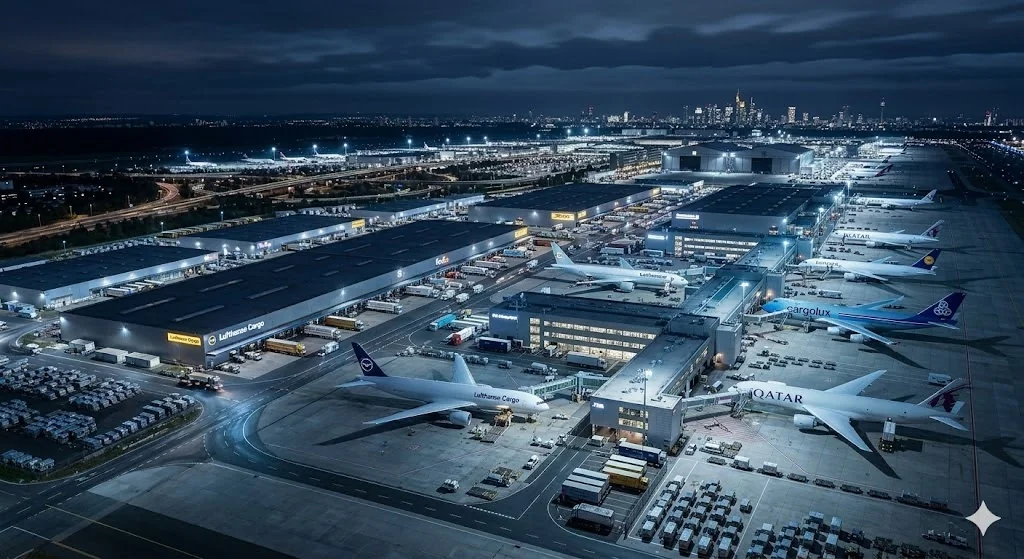
When I was managing freight operations out of Frankfurt, Germany, one thing became clear very quickly: European logistics moves differently. Not just in terms of regulations, carrier networks, or customs procedures — but in terms of how the industry thinks about technology, data, and the future of trade.
The Frankfurt freight hub is one of the most technologically advanced cargo environments in the world. Lufthansa Cargo's operations at Frankfurt Airport were processing real-time cargo data, predictive capacity planning, and automated customs pre-clearance at a scale that most US freight operations were still years away from matching. That gap has narrowed significantly since I returned to Chicago. But the directional lead Europe holds on freight technology — and specifically on AI adoption in logistics — remains real, and it has direct implications for every US importer and exporter operating today.
This post is about what is actually happening at the intersection of AI and global freight, what I observed in Frankfurt that is now coming to the US market, and what you need to understand and act on as an importer or exporter in 2026.
Why Europe Got There First
The European freight technology advantage did not happen by accident. Three structural factors pushed European logistics operators toward technology adoption earlier and faster than their US counterparts.
The first is regulatory complexity. Moving freight across European borders — even within the EU single market — involves navigating a web of customs procedures, VAT regimes, transit documentation requirements, and country-specific regulations that has no real equivalent in domestic US logistics. The complexity created an early and urgent need for technology that could manage documentation, automate compliance checks, and reduce the human error rate in cross-border shipments. Technology was not a competitive advantage in European freight — it was a survival requirement.
The second is infrastructure density. Europe's freight network is geographically compact relative to the volume it handles. Frankfurt, Rotterdam, Antwerp, Hamburg, and Felixstowe are all within relatively short distances of each other and serve an enormous concentration of manufacturing and trade activity. The density of freight movement created both the data volume and the economic incentive to develop AI tools that could optimize routing, predict capacity constraints, and dynamically reprice freight in real time.
The third is early investment in digital customs infrastructure. The European Union's Union Customs Code — which came into full effect in 2016 — mandated electronic customs filing and digital data exchange across all EU member states years before the US completed its own ACE system modernization. That regulatory push created a foundation of digital customs data that AI tools could be trained on and built around.
The result is that European freight operators — from Lufthansa Cargo and DHL to DB Schenker and Kuehne+Nagel — were building and deploying AI-powered logistics tools while many US freight companies were still debating whether to invest in basic tracking technology.
What AI Is Actually Doing in Freight Right Now
Before going further, it is worth being precise about what artificial intelligence means in a logistics context — because the term is used loosely and often inflated beyond what the technology is actually delivering today.
The most mature and commercially deployed AI applications in freight fall into four categories.
Predictive capacity and rate forecasting. Machine learning models trained on historical shipment data, carrier schedules, seasonal patterns, and macroeconomic indicators can predict freight rate movements and capacity availability with meaningful accuracy. Lufthansa Cargo's revenue management system, for example, uses dynamic pricing algorithms that adjust cargo rates in real time based on demand signals — similar to how airlines price passenger seats. For importers, this means the rate your forwarder quotes today may not be the rate available tomorrow, and understanding market timing is increasingly a data science problem as much as a negotiation one.
Automated document processing. This is arguably the highest-impact AI application in freight operations today, and one where European operators have been particularly advanced. AI-powered document processing tools can read a commercial invoice, extract the relevant fields — shipper, consignee, product description, value, HTS code, country of origin — and populate a customs entry or freight booking automatically, without human rekeying. The error rate on AI-extracted document data, for well-trained models on standard document formats, is now lower than human data entry error rates. DHL's operations in Frankfurt were using versions of this technology for air waybill processing years before it became common in US freight operations.
Predictive customs risk scoring. CBP's own Automated Targeting System uses AI to assign risk scores to inbound shipments and determine which ones to examine. But private sector AI tools are now doing the same thing from the importer's side — analyzing a shipment's characteristics and flagging the likelihood of a customs exam, a classification query, or a compliance issue before the goods leave the origin country. European customs technology companies including Descartes and Customs City have been offering versions of this capability to importers and freight forwarders for several years.
Supply chain visibility and exception management. AI-powered visibility platforms track shipments across every mode and milestone, identify exceptions — delays, port holds, vessel diversions — and generate automated alerts with recommended actions. The difference between a basic tracking tool and an AI-powered visibility platform is that the latter does not just tell you what happened — it tells you what is likely to happen next and what you should do about it. Project44 and Vizion, both of which have significant European customer bases, are among the leading platforms offering this capability to US importers.
The Frankfurt Lesson That Changed How I Think About Technology
During my time in Frankfurt, I worked alongside a logistics technology team at a major German freight forwarder that was building what they called a digital freight twin — a real-time data model of every active shipment in their network, updated continuously from carrier APIs, customs systems, port feeds, and weather data. The model did not just track shipments. It simulated outcomes. If a vessel was delayed by two days, the system instantly calculated the downstream impact on every connecting shipment, every warehouse appointment, every customs entry deadline — and generated a prioritized action list for the operations team.
At the time, I thought this was impressive but specialized — the kind of tool that only the largest freight companies could build or afford. What I have watched happen since is that the underlying technology has become dramatically more accessible. The AI models that power these systems are now available through commercial APIs. The data feeds that supply them are increasingly standardized. And the cost of building or accessing these capabilities has dropped to the point where mid-size freight forwarders — and even sophisticated importers — can use versions of them.
This is the shift that matters for US importers in 2026. The technology that was exclusive to Lufthansa Cargo's operations center in Frankfurt five years ago is now accessible to any importer willing to learn how to use it.
What This Means for US Importers in 2026
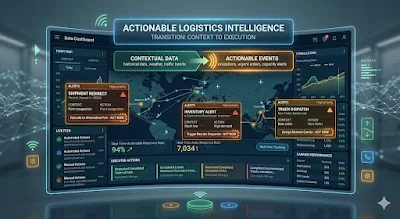
The practical implications of the freight AI revolution for US importers fall into three areas.
Your freight forwarder's technology is now a vendor selection criterion. Five years ago, asking a freight forwarder about their technology stack was a secondary consideration — what mattered was their rates and their relationships. Today, a freight forwarder without AI-powered visibility, automated document processing, and real-time exception management is a operational liability. The difference between a forwarder who knows your container is on hold at LA because their AI flagged it at 2 AM and a forwarder who finds out when you call them at 9 AM is measured in demurrage dollars and days of delay. When you evaluate a freight forwarder, ask specifically what technology they use for shipment visibility, document processing, and customs risk management. The answer tells you more than their rate sheet.
AI-powered classification tools are changing customs compliance. Several commercial tools now use AI to suggest HTS classifications based on product descriptions, photographs, and technical specifications. These tools do not replace a licensed customs broker — the liability for classification accuracy still rests with the importer of record, and AI classification tools make errors on complex products. But they are genuinely useful for initial classification research, for identifying classification alternatives that may carry lower duty rates, and for flagging when a product's characteristics suggest a classification dispute risk. Importers who use these tools intelligently — as a first step rather than a final answer — are doing compliance work faster and more thoroughly than those relying on manual research alone.
The competitive advantage in logistics is shifting from relationships to data. This is the most significant long-term implication of the freight AI revolution, and the one that European logistics operators understood before their US counterparts. For decades, the competitive advantage in freight forwarding was relationships — who you knew at the carrier, which CBP officer you had on speed dial, which terminal manager owed you a favor. Those relationships still matter. But increasingly, the importers and forwarders who are winning are the ones who have better data — more accurate demand forecasting, more precise landed cost modeling, earlier visibility into disruptions, and faster response to exceptions. Data is the new relationship. AI is what makes data actionable.
Where Tarsis Fits Into This Landscape
I built Tarsis AI specifically because I watched this technology transformation happen in Frankfurt and I believe that access to AI-powered freight expertise should not be limited to importers large enough to have dedicated logistics technology teams.
The same AI capabilities that Lufthansa Cargo uses to optimize its cargo revenue management — now accessible through commercial AI platforms — can be applied to the specific compliance, cost, and strategy questions that mid-size importers face every day. An importer who can ask a question and get an expert answer in seconds — not wait three days for a consultant callback — operates with a structural advantage over one who cannot.
This is what freight technology at its best looks like: not replacing human expertise, but making it infinitely more accessible. The Frankfurt lesson, applied to the Chicago importer.
The Bottom Line
European freight operators got to AI adoption earlier because their environment demanded it. The regulatory complexity, the infrastructure density, and the early investment in digital customs infrastructure created conditions where technology was not optional — it was the only way to operate at scale.
Those conditions are now arriving in the US market. CBP's increasing use of AI for risk targeting, the explosion of freight visibility platforms, the emergence of AI-powered classification tools, and the growing gap between technology-enabled and technology-resistant freight forwarders — all of it is moving in the same direction.
For US importers in 2026, the question is not whether AI will change how freight operates. It already has. The question is whether you will be among the importers who understand that change and use it to their advantage — or among those who discover it was happening after the competitive gap has already opened.
Frankfurt taught me that lesson early. It has informed how I think about freight, technology, and the future of global trade ever since.