Air Freight for Beginners: Everything You Need to Know Before Your First Shipment
New to air freight? Learn how it works, what it costs, and when to use it. A plain-language guide from a 15-year freight forwarding veteran.
ByJason Kim · Branch Manager · 15 years in freight forwarding · Los Angeles · Frankfurt · Chicago
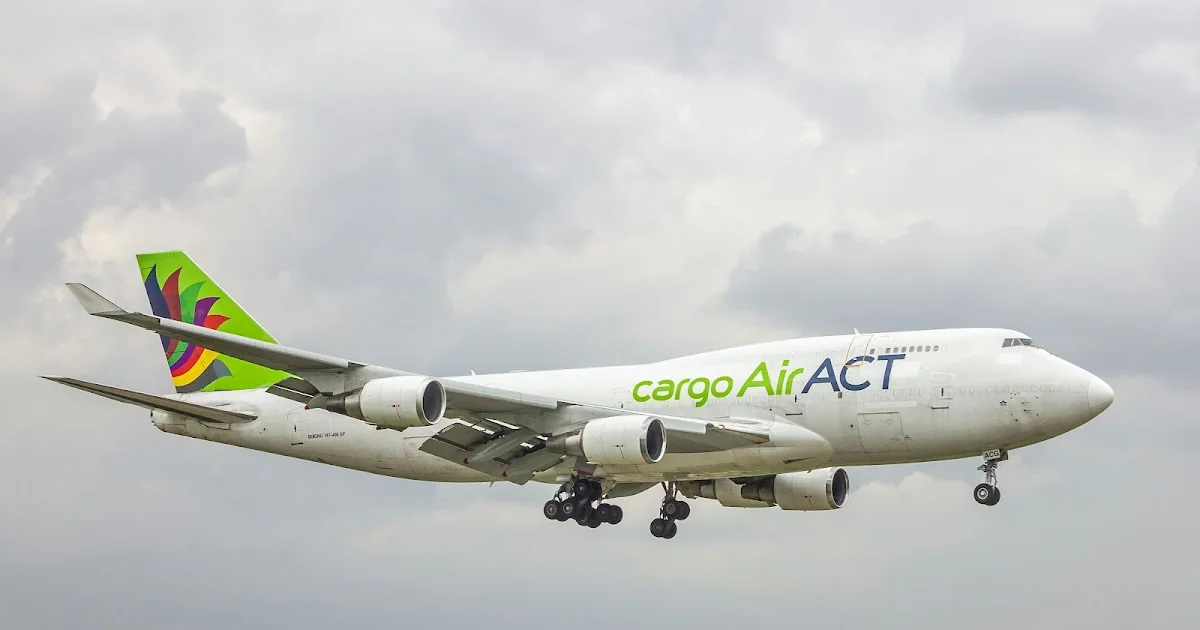
Air freight is the fastest way to move goods across international borders. It is also the most expensive — and the most misunderstood by new importers who choose it for the wrong reasons, or avoid it for the wrong reasons, and end up paying more either way.
I have managed air freight operations out of Frankfurt Airport — one of the world's busiest cargo hubs — and coordinated air freight arrivals into Chicago O'Hare for over a decade. In that time I have seen importers use air freight brilliantly and use it disastrously. The difference almost always comes down to one thing: understanding how it works before you need it.
This guide covers everything a new importer needs to know about air freight — how it is priced, how it moves, what the documentation looks like, and when it makes financial sense to choose air over ocean.
How Air Freight Actually Works
When you ship goods by air freight, your cargo moves through a chain of handlers between your supplier's door and your warehouse. Understanding each step helps you anticipate costs and avoid surprises.
Your supplier hands the goods to a freight forwarder or airline agent at the origin. The forwarder consolidates your cargo — if it is a small shipment — with other shippers' cargo into a single unit load device, known as a ULD. A ULD is the standardized container or pallet used to load cargo onto commercial aircraft. Your individual boxes are packed inside a ULD along with other importers' freight, the ULD is loaded onto the aircraft, and it flies to the destination airport.
At the destination, the ULD is unloaded, broken down, and your cargo is separated. It then moves through customs clearance, and your freight forwarder or customs broker arranges final delivery to your facility.
The entire process — from supplier pickup to your warehouse door — on a direct international air freight lane typically takes 3 to 7 days, depending on the origin, destination, and how quickly customs clearance is completed. For comparison, ocean freight on the same lane typically takes 25 to 40 days.
How Air Freight Is Priced — The Chargeable Weight Concept
This is the single most important concept for new air freight shippers to understand — and the one that causes the most confusion on first invoices.
Air freight is priced by chargeable weight, not actual weight. Chargeable weight is the greater of two numbers: your shipment's actual weight in kilograms, or its volumetric weight.
Volumetric weight — also called dimensional weight — is calculated by measuring the total cubic volume of your shipment and dividing by a standard factor. The IATA standard for air freight is 6,000 cubic centimeters per kilogram. In practical terms, this means you divide your shipment's volume in cubic centimeters by 6,000 to get the volumetric weight in kilograms.
Here is a simple example. Suppose you are shipping 50 boxes of lightweight foam packaging components. The actual weight of all 50 boxes combined is 80 kilograms. But each box measures 60cm × 50cm × 40cm, giving a volume of 120,000 cubic centimeters per box. Multiply by 50 boxes and your total volume is 6,000,000 cubic centimeters. Divide by 6,000 and your volumetric weight is 1,000 kilograms.
Your chargeable weight is 1,000 kilograms — not 80 kilograms. Your freight rate is calculated on 1,000 kilograms.
This is why light, bulky goods are extremely expensive to ship by air. The aircraft's limiting factor is often volume, not weight capacity — airlines price accordingly. Before you quote an air freight shipment, always calculate both actual and volumetric weight and use the higher number in your cost estimate.
The Components of an Air Freight Invoice
New importers often underestimate air freight costs because they only think about the base freight rate. Here is everything that typically appears on a real air freight invoice.
Base freight rate — charged per kilogram of chargeable weight on the specific lane. Rates vary significantly by origin, destination, carrier, and market conditions.
Fuel surcharge — also called the fuel adjustment factor or FAF. Airlines add this on top of the base rate and adjust it regularly based on jet fuel prices. In 2026, fuel surcharges on major international lanes typically add 30 to 60 percent of the base rate. Always ask for the current fuel surcharge before getting a rate quote.
Security surcharge — a fixed or per-kilogram charge covering security screening of air cargo. This is mandatory on all international air freight.
Origin handling charges — fees charged by the freight forwarder or airline agent at the origin airport for receiving, weighing, and processing your cargo.
Destination handling charges — similar fees at the arrival airport for unloading, sorting, and releasing your cargo.
Air waybill fee — a document fee for issuing the air waybill, which is the air freight equivalent of a bill of lading.
Customs clearance and brokerage — your customs broker's fees for filing the import entry, paying duties, and managing the release of your cargo at the destination airport.
Delivery charges — trucking from the destination airport to your warehouse.
When you add all of these together, the all-in cost of air freight is typically 2 to 3 times the base freight rate alone. A shipper who sees a quoted rate of $3.50 per kilogram and estimates their 100-kilogram shipment will cost $350 will be surprised when the invoice arrives at $800 or more. Always ask for an all-in rate that includes every charge from origin door to destination airport.
Air Freight vs. Ocean Freight — When Air Makes Financial Sense

Air freight costs roughly 4 to 6 times more than ocean freight on a per-kilogram basis for most international lanes. For the vast majority of shipments — high-volume, low-time-sensitivity goods — ocean freight is the right choice. But there are specific situations where air freight is not just justified, it is the economically correct decision.
When your product has a high value-to-weight ratio. High-value goods that are physically small and light — electronics components, pharmaceuticals, precision instruments, jewelry, semiconductor materials — are natural air freight candidates. The freight cost as a percentage of the goods' value is manageable, and the faster transit reduces inventory carrying costs and working capital requirements.
When the cost of stockout exceeds the freight premium. Calculate what one day of lost sales costs your business if a key product is out of stock. If that number is larger than the daily cost premium of air over ocean, air freight is the right financial choice. This is not a sentimental argument — it is arithmetic.
When your lead time is fixed and non-negotiable. Product launches, retail seasonal deadlines, trade show deliveries, and contractual delivery commitments all create hard deadlines. When ocean freight cannot meet the deadline and the consequence of missing it is a lost contract or a penalty, air freight is not expensive — it is cheap compared to the alternative.
When ocean freight reliability is unusually poor. During periods of severe port congestion — as seen at LA/Long Beach in 2021 and 2022 — ocean freight schedules become unpredictable. When vessel reliability drops below 50 percent on your lane, the transit time advantage of ocean freight effectively shrinks, and air freight becomes more competitive on a risk-adjusted basis.
When your goods are perishable or time-sensitive by nature. Fresh produce, live animals, temperature-sensitive pharmaceuticals, and similar goods have no viable ocean freight option. Air freight is the only mode.
The Air Waybill — Your Key Document
The air waybill — AWB — is the primary transport document for air freight. Unlike an ocean bill of lading, an air waybill is not a document of title — it does not control ownership of the goods. It is a receipt and a contract of carriage between the shipper and the airline, and it provides proof of the shipment details.
Every air freight shipment has two air waybills: a Master Air Waybill — MAWB — issued by the airline to the freight forwarder covering the consolidated ULD, and a House Air Waybill — HAWB — issued by the freight forwarder to you as the individual shipper covering your specific cargo within the consolidation.
The HAWB is your primary reference document. It contains the shipper and consignee details, the origin and destination airports, the description of goods, the chargeable weight, and the declared value for customs purposes. Check every field on your HAWB carefully before the shipment departs — errors on this document create delays at customs that cost more than the document fee to fix.
Key Airports for US Importers to Know
Not all US airports handle significant international air cargo. The major international air cargo gateways for importers bringing goods into the United States are Chicago O'Hare, Los Angeles International, New York John F. Kennedy, Miami International, Dallas/Fort Worth, and Louisville — which serves as the primary hub for UPS Airlines.
For importers based in the Chicago area, O'Hare is your primary gateway. O'Hare handles direct international cargo from Europe, Asia, and the Middle East through carriers including Lufthansa Cargo, Air France Cargo, British Airways World Cargo, Korean Air Cargo, Cathay Pacific Cargo, and Qatar Airways Cargo. The customs brokerage infrastructure at O'Hare is well-developed — clearance times for clean shipments are typically 4 to 8 hours from aircraft arrival.
If your goods are arriving at a different gateway — Los Angeles or JFK, for example — and need to reach Chicago, your freight forwarder will arrange bonded truck or domestic air transfer. Factor this additional transit time and cost into your planning.
What New Importers Get Wrong About Air Freight
They do not calculate volumetric weight before requesting a quote. The rate they budget and the rate they pay are two very different numbers when they are shipping light, bulky goods.
They use their ocean freight forwarder for air freight without checking their expertise. Ocean and air freight require different carrier relationships, different documentation knowledge, and different handling capabilities. The forwarder who is excellent on your ocean FCL may not have the same capability for urgent air freight.
They do not build air freight into their contingency planning. Many importers only think about air freight during an emergency — when they are already under pressure, making decisions fast, and paying emergency rates. Identifying your air freight forwarder, understanding the rates on your key lanes, and building a documented air freight protocol before you need it reduces both cost and stress when the situation arises.
They forget about customs clearance timing. Air freight gets your goods to the destination airport in days. Customs clearance adds time on top of that. If your documentation is incomplete or your product requires coordination with the FDA, CPSC, or another government agency, your air freight shipment can sit at the airport for days longer than the flight itself took. Clean documentation is as important in air freight as the airline you choose.
Your Air Freight Starter Checklist
Before you arrange your first air freight shipment, work through these steps.
Confirm the chargeable weight of your shipment — both actual and volumetric — before requesting a rate quote. Get an all-in rate that includes fuel surcharge, security surcharge, origin and destination handling, and customs brokerage. Verify that your freight forwarder has experience with your specific commodity — especially if it is regulated by FDA, CPSC, or falls under dual-use export control regulations. Prepare your commercial invoice with a specific product description, correct HTS classification, and accurate declared value. Identify your customs broker at the destination airport before the shipment departs. Build 24 to 48 hours of buffer into your timeline for customs clearance — even on a clean shipment.
Air freight done right is one of the most powerful tools in an importer's logistics toolkit. Air freight done wrong is one of the most expensive mistakes you can make. The difference is almost always preparation.
Related Posts on TradeEdge