Why Inland Freight is a Different Beast: Routing Shipments Through Midwest Hubs
Bypassing coastal ports for Midwest hubs? A 15-year logistics veteran explains the hidden costs of inland freight, chassis splits, and Chicago drayage
ByJason Kim · Branch Manager · 15 years in freight forwarding · Los Angeles · Frankfurt · Chicago
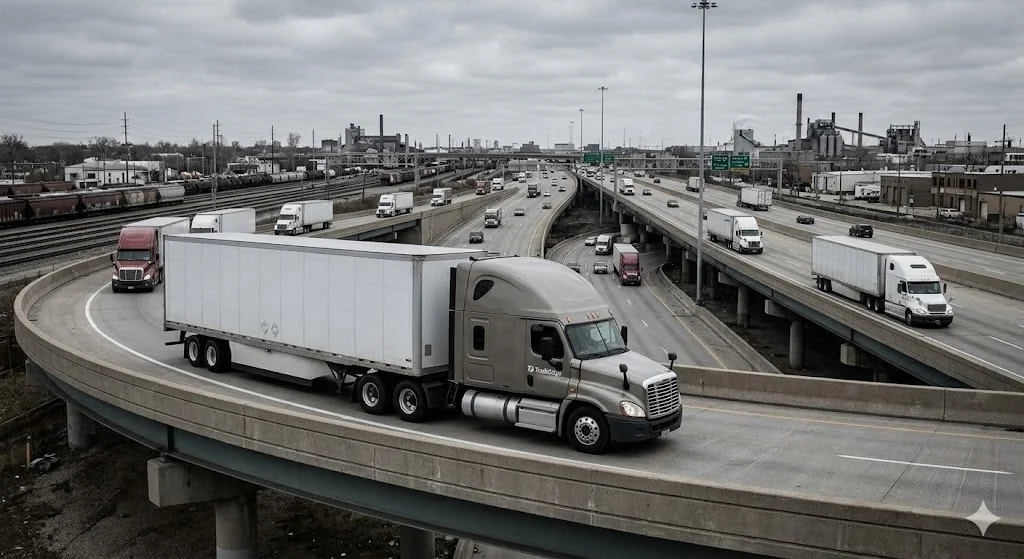
If you read my last post on port congestion, you know that coastal bottlenecks are eating into margins. The natural reaction for many mid-sized importers is to bypass the coast entirely. Just book an IPI (Interior Point Intermodal) move, put the container on a rail right off the vessel in LA, and send it straight to a Midwest hub like Chicago. Problem solved, right?
Not exactly.
In my 15 years managing operations, including heavy volume out of Chicago, I've had countless importers realize too late that routing freight inland doesn't eliminate supply chain friction—it just changes the flavor of it. Inland freight is a completely different beast, and if you treat a Chicago rail ramp like a Los Angeles ocean terminal, you are going to bleed cash.
Here is the 2026 reality of Midwest inland routing, and the operational framework you need to navigate it.
The 2026 Midwest Reality Check
Before you shift all your routing to the Midwest, you need to look at the data. In February 2026, the American Transportation Research Institute officially named Chicago's I-294 at I-290/I-88 interchange the number one worst freight bottleneck in the United States, surpassing the long-standing record holder in Fort Lee, New Jersey.
Add to this the erratic import volumes caused by early 2026 tariff front-loading, and you have a recipe for severe local congestion. You might get your box to the Midwest faster, but getting it out of the rail yard and to your distribution center is where the real fight begins.
The Hidden Margin Killer: The "Chassis Split"

At an ocean port, your trucker pulls up, the container gets mounted on a chassis, and it leaves. Inland rail ramps operate differently.
Due to systemic equipment imbalances, the rail ramp where your container arrives frequently does not have a road-worthy chassis available to move it. This forces your drayage provider to perform a Chassis Split.
A chassis split means your driver has to drive to Location A (a separate depot) just to rent a bare chassis, then drive to Location B (the rail ramp) to pick up your container.
The Cost Impact: A standard Chicago drayage move might be quoted at $350. But in 2026, a chassis split will slap an unexpected $150 to $400 surcharge on your invoice, not to mention the daily chassis rental fee and the lost hours of driver time. If you aren't factoring split fees into your landed cost analysis, your margins are a mirage.
The Inland Playbook: 3 Rules for Midwest Hubs
If you are routing through the Midwest, you need to abandon the coastal playbook. Here is how you protect your freight spend:
1. Vet Your Forwarder’s Drayage Network
Do not accept a generic "trucking included" quote. Ask your forwarder explicitly: “Does your drayage partner operate with their own proprietary chassis pool, or are they relying on the public pool?” Carriers with their own wheels bypass the chassis split nightmare entirely.
2. Audit Your Free Time (It's Shorter Than You Think)
Ocean terminals might give you 4 to 5 days of free time. Inland rail ramps are ruthless. You often only get 24 to 48 hours once the container is grounded. If you don't have a trucker pre-booked and waiting for the train to arrive, you will instantly trigger rail storage fees, which escalate aggressively.
3. Build "Buffer Days" for Grounding
Your tracking app might say the train arrived in Chicago on Tuesday. That does not mean you can pick it up. A train can sit in the yard for 24 to 48 hours before the container is actually "grounded" (lifted off the train and placed in the yard) and available for pickup. Never dispatch a trucker based on train arrival; dispatch only on a grounded notification.
The TradeEdge Takeaway: Routing IPI to the Midwest is a highly effective way to bypass coastal port chaos, provided you account for the local bottlenecks. Stop treating drayage as an afterthought. Secure your chassis capacity before your cargo ever hits the rail, and bake potential split fees into your upfront cost projections.