The 2026 Global Freight Landscape: Lessons from LA to Frankfurt
Navigate the 2026 global trade shift. An expert analysis of the logistics landscape from LA port congestion to Frankfurt's inland hubs, featuring esse
ByJason Kim · Branch Manager · 15 years in freight forwarding · Los Angeles · Frankfurt · Chicago
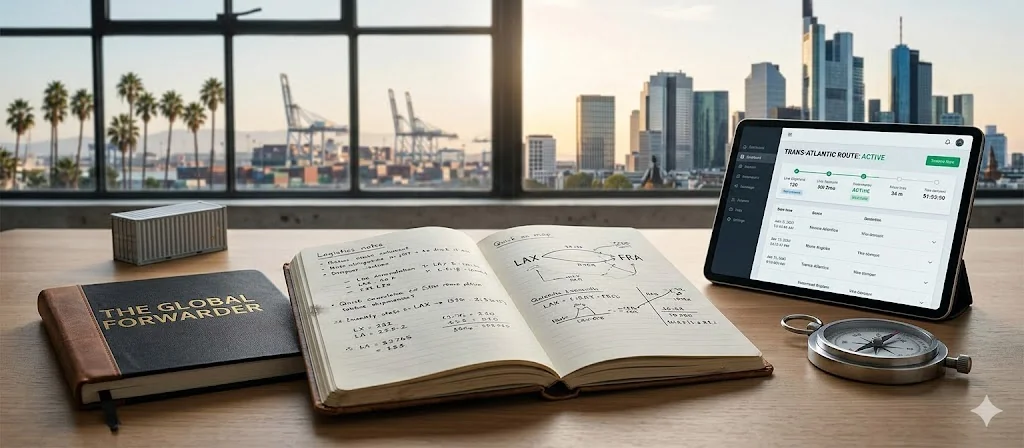
The world of logistics in 2026 feels fundamentally different than it did even five years ago. Having spent nearly a decade managing operations in the sprawling port complex of Los Angeles before relocating to the heart of Europe in Frankfurt , I’ve had a front-row seat to a massive shift in how the world moves goods. Whether you are navigating the automated docks of San Pedro Bay or the high-speed intermodal hubs of Germany, the challenges of 2026 require a new playbook.
The Pivot to "Just-in-Case" Inventory For decades, the industry worshipped at the altar of Just-in-Time (JIT) delivery. However, the mid-2020s taught us that "lean" can easily become "fragile." In 2026, we are seeing a definitive pivot toward Just-in-Case (JIC) strategies. Companies are no longer willing to risk a total shutdown because of a single delayed vessel or a labor dispute. We are building "buffers" back into the supply chain. While this increases holding costs, the cost of a "stockout" in today’s volatile market is far higher.
Infrastructure: LA vs. Frankfurt One of the most striking differences between my time in LA and Frankfurt is how infrastructure is adapting to "Mega-Vessels."
-
The LA/Long Beach Model: The focus is on shore-power and massive automated cranes to clear backlogs. It is a battle of sheer volume and physical space.
-
The Frankfurt/European Model: Because Frankfurt is an inland hub, the "port" isn't just water—it's the seamless connection of Rhine barges and high-speed rail.
In 2026, a "successful" port isn't just one that can dock a ship; it’s one that can move that cargo into the hinterland within 24 hours.